
RESEARCH & CONSERVATION
FROM DATA TO PROTECTION
Study What Lives There. Understand Why It Matters. Protect It.
Tom Bartlett’s work is grounded in a simple idea: if we want to protect natural places, we first need to understand them.
For more than five decades, he has helped build that understanding through bird banding, wildlife surveys, breeding-bird studies, population monitoring and long-term ecological observations across Ohio. Paula is part of that sustained effort, particularly across the Lake Erie islands, where she helps collect and record the repeated field data that give long-term studies their value.
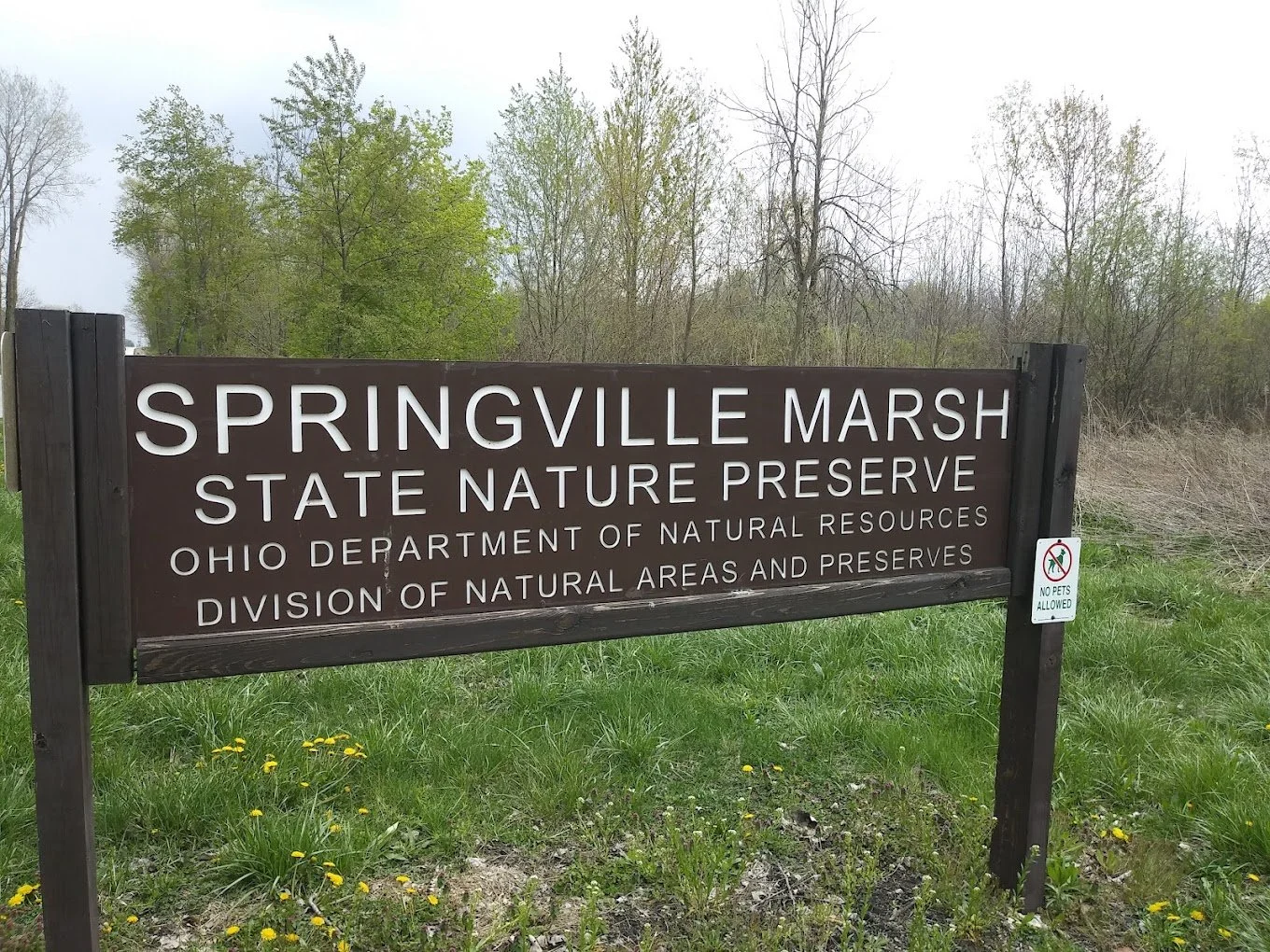
Springville Marsh
Springville Marsh State Nature Preserve is one of the places closest to Tom’s heart. The marsh is a surviving remnant of northwest Ohio’s historic Great Black Swamp, an ecosystem that once covered an enormous portion of the region.
Tom was involved in efforts to protect the property and has spent decades conducting research there. His work has helped document the birds, plants and wildlife that make the marsh important, while creating a long-term record that future researchers can continue to learn from.
Western Lake Erie
Tom’s research has also taken him throughout western Lake Erie, including work at Ottawa National Wildlife Refuge, Winous Point Marsh Conservancy and the Lake Erie islands. A long-term shorebird study conducted with research partners banded nearly 12,000 shorebirds representing 28 species, adding valuable data about birds using western Lake Erie wetlands. On the islands, Tom and Paula have worked with assistants for decades to collect migration data through banding and survey work.
Long-Term Data Matters
Natural systems change. Development changes landscapes. Populations rise and fall. Migration timing shifts. Weather patterns change. Long-term research gives scientists something essential: a record against which those changes can be measured.
Tom’s decades of consistent field work provide exactly that kind of record. The value grows with time.
Research That Leads Somewhere
The purpose of Tom’s research has never been to collect information and let it sit on a shelf. Data from bird surveys and banding projects has helped conservation organizations demonstrate the importance of habitat, guide land-use decisions and support the protection and purchase of significant natural areas. One Lake Erie Islands conservation partner has specifically credited migratory bird data gathered by Tom, Paula and their assistants as crucial in securing funding for a preserve purchase.
That is where research becomes conservation.
LAKE ERIE ISLANDS
THE LAKE ERIE ISLANDS NATURAL HISTORY PROJECT
An Island Laboratory, Decades in the Making.
The Lake Erie islands are beautiful places to visit. They are also extraordinarily important places to study.
For migrating birds, the islands can provide critical places to rest and feed during journeys across Lake Erie. They are also home to nesting and resident birds, plants, reptiles, insects and other wildlife that together form distinctive island ecosystems.
How the Project Began
Tom’s connection to Kelleys Island began during the first Ohio Breeding Bird Atlas in the 1980s, when he was assigned to survey the island for breeding birds. The experience revealed just how important the islands were to both breeding and migrating species.
In the mid-1990s, that interest grew into bird banding on Kelleys Island. Over time, the work expanded into a broader natural history project built around field surveys, bird banding, photography, specimen documentation and long-term data collection.
Kelleys Island
Bird banding on Kelleys Island began in the mid-1990s and has become one of Tom’s longest-running island research efforts. At the Cleveland Museum of Natural History’s Scheele Preserve alone, Tom has now banded more than 20,000 birds.
The work has included migration banding, Northern Saw-whet Owl research and long-term surveys designed to create a picture of bird life on the island across seasons and years. For nearly 30 years, Paula has worked beside Tom and other volunteers at Cleveland Museum of Natural History preserves on the island, helping mist-net, process, record and band thousands of birds.
The Bass Islands
In 2003, Tom helped begin a bird banding project on South Bass Island in connection with educational programs. The work later expanded to Middle Bass Island and North Bass Island, creating additional opportunities to study migration, breeding birds and island habitats.
Why the Data Matters
The purpose of the Lake Erie Islands Natural History Project is larger than bird banding. It is to document the organisms that depend upon the islands and create information that can support conservation.
Data collected through the project has been used by conservation partners to help identify important habitat, guide land-use decisions and support the protection of natural areas on the islands. That record is a team product, built through the repeated work of Tom, Paula and the many assistants and volunteers who return season after season.
The islands are not simply places birds pass over. For many birds, they are part of the journey itself.